Christoph Schönberger:
Sonatina for Horn and Piano
(2023) Duration: 16'
- Scherzo – Prestissimo, Trio – misterioso, prestissimo
- Elegia – Larghetto
- Intermezzo Piccolo – Allegro
- Finale – Allegro
PDF files of the score and horn part are freely available from the IMSLP website.
Printed copies are available from the composer.
The Sonatina for Horn and Piano (2023) is the sibling of the Sonatina for Trumpet and Piano (2022). Both works share common traits, such as a misplaced Scherzo and a miniature movement that lasts less than a minute. Both works defy their diminutive "Sonatina" title with their four-movement form and substantial duration.
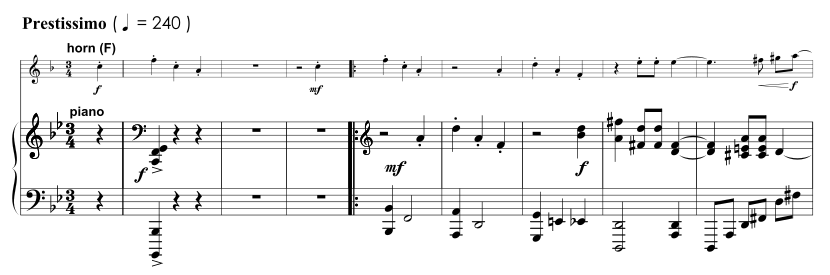
The Sonatina opens with a strong, four-note arpeggiated motive. It leads into a lightning-fast Scherzo, where the central Trio with its accented rhythms also hurries along in the same relentless prestissimo tempo.
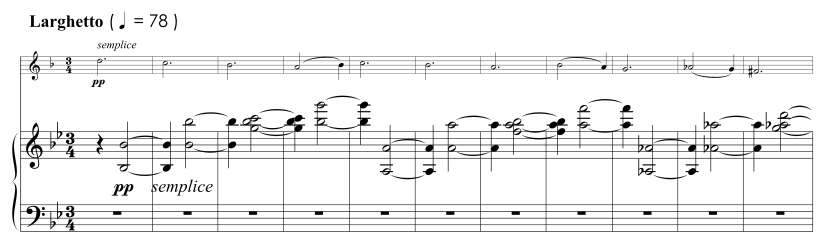
The second movement, Elegy, is slow, quiet, and melancholic in character, and offers a striking contrast. It is a set of four variations on a simple melody, each variation joined to the following one by piano chords resembling the sound of bells and preparing a key change for the next variation.
The third movement, Intermezzo Piccolo, is a short and playful interjection, designed to take the listener out of the Elegy's soundscape and set the stage for the last movement.
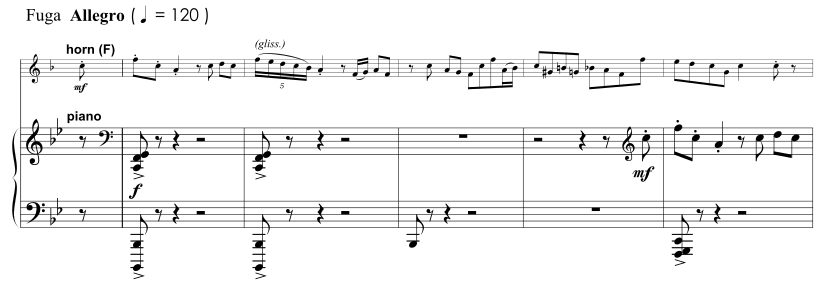
After a short introduction, the horn plays the arpeggiated main subject of the Finale. It starts with the same four notes as the first movement's opening motive, but now it is set in a dotted rhythm and in 4/4 meter (instead of the Scherzo's 3/4 meter) and forms part of a longer, soaring melodic line. The middle section brings another subject. Its swift flow is harshly interrupted, and, after a repetition, the movement ends with a three-part fugue where the parts are assigned to the horn, the right hand, and the left hand of the piano. The fugue consists of an exposition, two episode and development sections, and then culminates in a coda of almost orchestral intensity with the horn in its highest register playing the main subject.
“Christoph Schönberger's Sonatina reminds us that advanced new works can still be written in an older style. It requires a range from F2 to C6, and the tessitura of the fourth movement in particular is high. [...] The virtuoso characteristic of this Sonatina is not in its use of any advanced techniques or special effects, rather it is in the musicianship required to negotiate the fugue with the pianist in the last movement, and to play with classic style and subtlety throughout.
“This work will likely become a part of recitals by students and teachers at universities. It has all the qualities of classical sonatas; however, it can serve as a refreshing substitute for the standard literature. Separate movements could also make fine pieces for study. For example, the slow second movement provides the opportunity to explore and demonstrate the expressive qualities of the instrument's lower register. The short third movement could become a short and sweet encore. This Sonatina is an attractive addition to our literature.”
(Commentary by Randall E. Faust in: The Horn Call, journal of the International Horn Society, vol. LVI no. 1, October 2025, p. 102)
Recording with Ben Goldscheider, horn and Richard Uttley, piano
Isa Khan - recording engineer, videography & post-production
Callum Lawrence (Azimuth Media Production) - videography & assistant engineer
Recorded at Saffron Hall, UK. May 2024.
This recording is published under the terms of a Creative Commons licence CC BY.
A playlist with the Sonatinas's four movements can be found on YouTube.
I. Scherzo – Prestissimo, Trio – misterioso, prestissimo
Duration: 4'06"
II. Elegia – Larghetto
Duration: 4'15"
III. Intermezzo Piccolo – Allegro
Duration: 0'35"
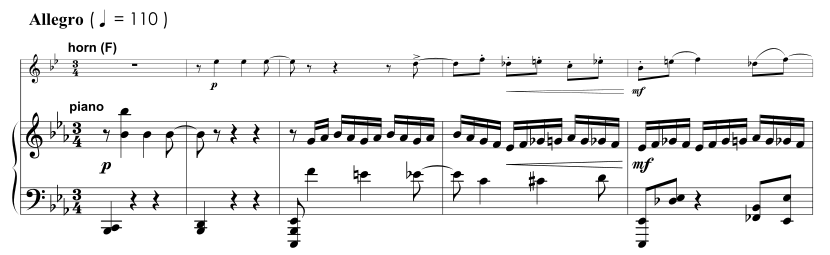
IV. Finale – Allegro
Duration: 6'28"
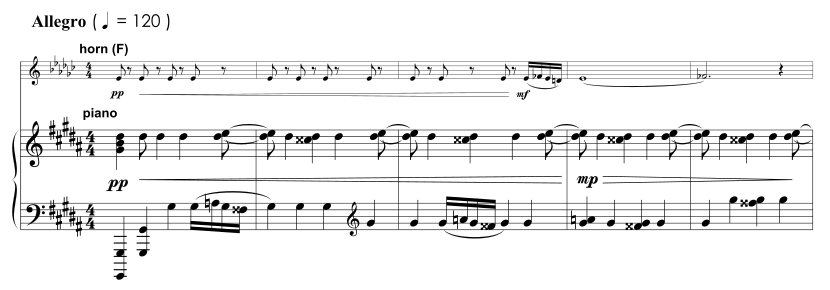
Finale - Fugue